At the High Risk Pregnancy Center in Nevada, we are devoted to protecting the health of mothers-to-be and their unborn babies. As obstetric subspecialists, our highly trained and experienced
maternal fetal medicine (MFM) doctors offer the most advanced testing and treatment options available for reducing pregnancy risks.
In fact, our team has been on the
leading edge of MFM (also known as perinatology) for more than two decades. Since then, we’ve introduced many new capabilities in Nevada and have made a substantial contribution to the modern standard of MFM care. Today, we still lead the way in technology, procedures, and
commitment to the women in our care and their unborn babies. Learn more about the
High Risk Pregnancy Center.
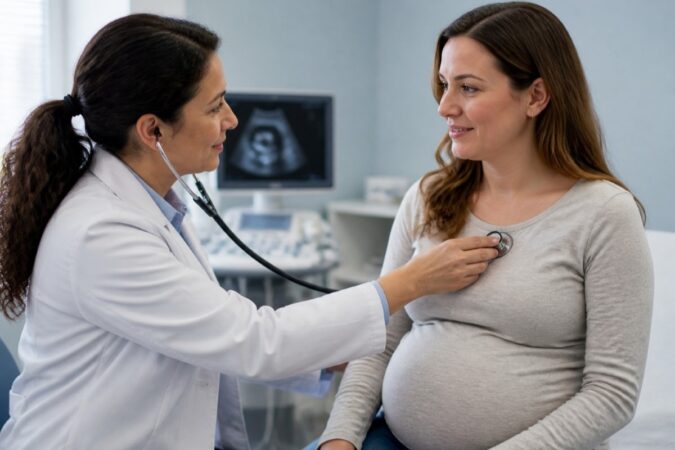
Pregnancy asks more of your cardiovascular system than it will at almost any other time in your life. Your blood volume rises sharply to supply the placenta, your heart pumps more blood with every beat, and your blood vessels relax to keep pressure steady. Those changes begin in the first trimester and peak in the…
Gestational diabetes is high blood sugar that develops during pregnancy in women who did not have diabetes before. The placenta produces hormones that make your cells less responsive to insulin. Most of the time the pancreas compensates by making more. When it cannot keep up, glucose builds in the bloodstream, and routine screening can show…
Stillbirth is the loss of a baby at 20 weeks of pregnancy or later. In the United States it affects roughly 1 in 175 births, and CDC data show that in 2024, there were about 5.4 stillbirths per 1,000 babies born. This is the lowest rate of stillbirths in decades but is still close to…
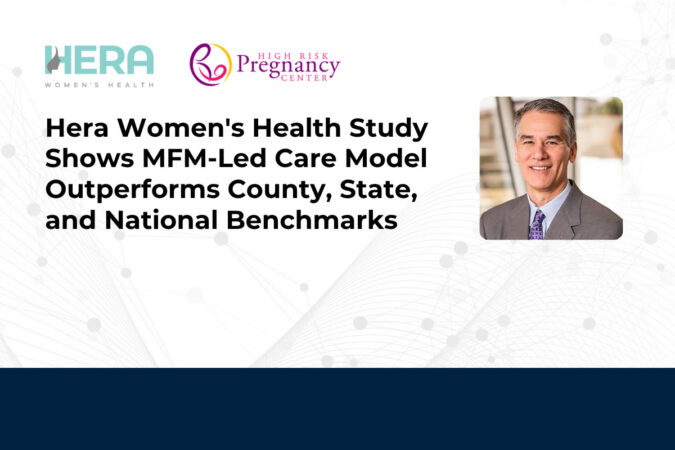
Hera Women’s Health announced the publication of a new article in the American Journal of Perinatology describing an MFM-led care model that positions maternal-fetal medicine subspecialists as system-level clinical architects across the organization’s obstetric network. The article, authored by Dr. Brian K. Iriye and Dr. Manijeh K. Kamyar, reports outcomes from more than 3,500 annual…
“Advanced maternal age” is the clinical label for a pregnancy in which you will be 35 or older on your due date. It is not a diagnosis. It is a category that flags risks worth watching more closely, and the honest summary is that most pregnancies after 35 are healthy. The threshold has a dated…
An autoimmune disease is a condition where your immune system, which normally fights off germs, mistakenly attacks your own body. Common examples include lupus, multiple sclerosis (MS), rheumatoid arthritis, and thyroid disease. If you live with one of these and you’re thinking about having a baby, you may wonder whether pregnancy is safe. The encouraging…
A preconception visit is a checkup you have with a doctor before you start trying to get pregnant. The goal is simple: find and fix anything that could make pregnancy harder or riskier, while there is still time to do something about it. This is especially helpful if you have a health condition like diabetes,…
Genetic counseling is a supportive service that helps you understand your chances of having a baby with a genetic or chromosomal condition. During pregnancy, it involves meeting with a specially trained counselor who reviews your health, your family history, and any test results to explain what they actually mean for you. The goal is simple:…
A miscarriage is the loss of a pregnancy before 20 weeks. It is far more common than many people realize, and most happen in the first trimester before the 12-week mark. When you see a number attached to your “risk,” it can feel scary or confusing. But that number is a general estimate, not a…
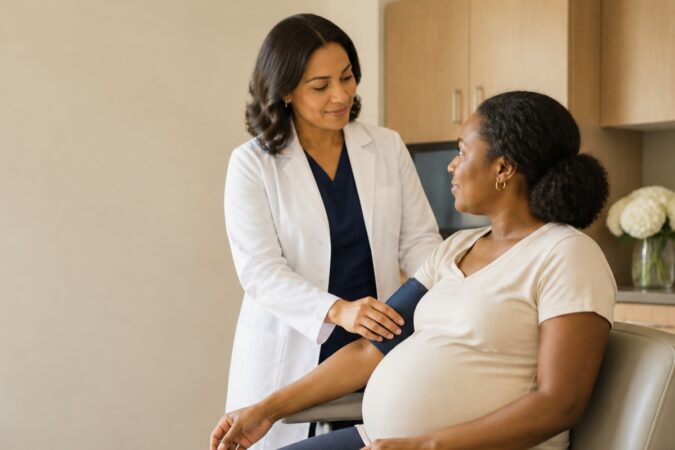
Preeclampsia is a serious pregnancy complication that involves high blood pressure and can damage organs like the liver or kidneys. It typically develops after 20 weeks of pregnancy, though it can sometimes appear earlier or even after delivery. Left untreated, preeclampsia can lead to life-threatening problems for both mother and baby, which is why understanding…