Gestational diabetes is high blood sugar that develops during pregnancy in women who did not have diabetes before. The placenta produces hormones that make your cells less responsive to insulin. Most of the time the pancreas compensates by making more. When it cannot keep up, glucose builds in the bloodstream, and routine screening can show this between 24 and 28 weeks.
A diagnosis doesn’t mean you did anything wrong. Genetics, age, family history, and how your particular placenta behaves all play a part, and plenty of women who eat well and stay active get it anyway.
Does gestational diabetes make you high risk?
It moves your pregnancy into the higher-risk category, which mostly means closer monitoring rather than worse odds. Blood sugar above target sends extra glucose across the placenta, and your baby responds by producing more insulin, which drives growth. That is what raises the chance of a larger baby, a harder delivery, a cesarean, and low blood sugar in your newborn during the first hours after birth. Gestational diabetes also increases your own risk of preeclampsia.
Those risks drop substantially once blood sugar is controlled. Well-managed gestational diabetes looks far closer to a typical pregnancy than an untreated one does.
What happens in the first two weeks
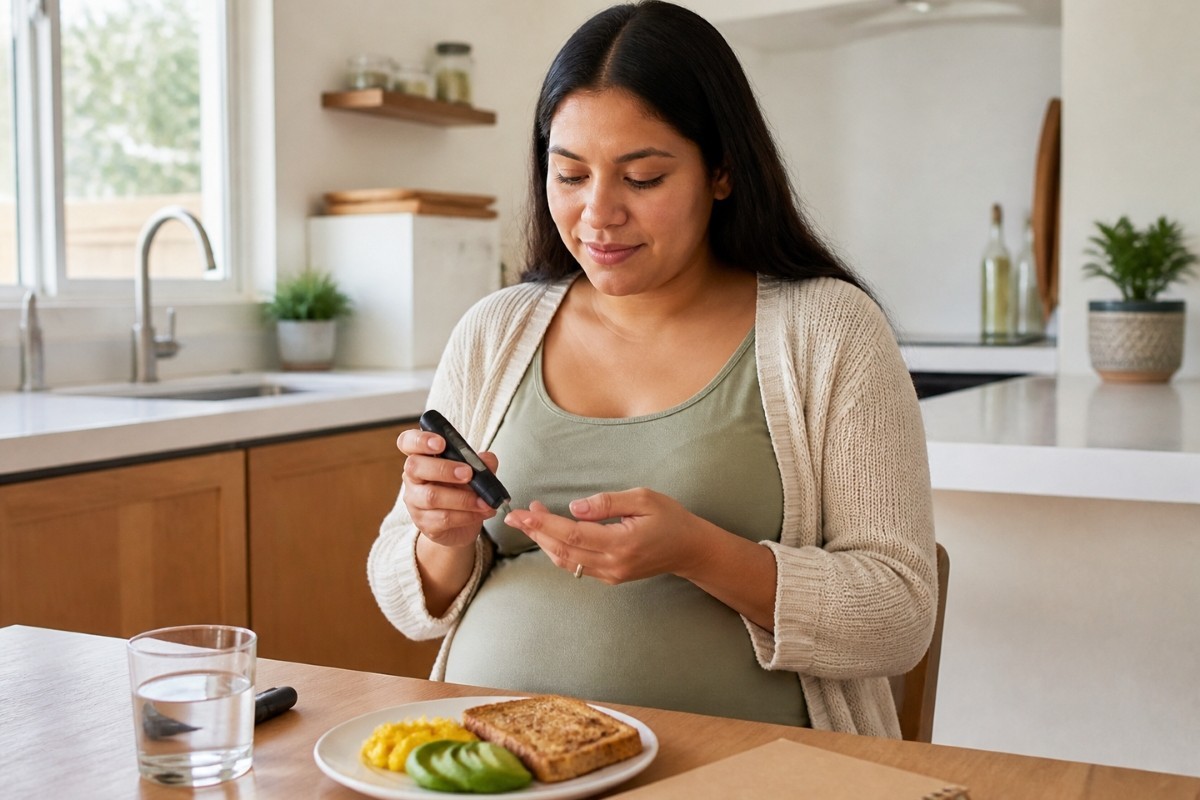
Expect three things. You will get a glucose meter and instructions to test after fasting, first thing in the morning, and again after each meal. You will meet with someone who walks you through what to eat. And your visits will get more frequent, often adding growth ultrasounds later to track your baby’s size.
Your provider will give you specific target numbers, since targets differ depending on when the reading is taken. Log your results or use the meter’s app. Patterns across a week tell your team more than any single number.
What to eat with gestational diabetes
The goal is not cutting carbohydrates out. Your baby needs them. The goal is spreading them across the day and pairing them so glucose enters your bloodstream gradually.
- Eat three moderate meals plus two or three snacks instead of a few large meals
- Pair every carbohydrate with protein, fat, or fiber
- Keep breakfast lowest in carbohydrate, since insulin resistance tends to peak in the morning
- Take a 10 to 15 minute walk after meals, which lowers post-meal readings noticeably
Most women bring their numbers into range with these adjustments alone.
When is insulin needed during pregnancy?
When food and activity are not enough. Needing medication reflects how strongly your placenta is working against insulin, and is not a failure of effort. Insulin is the usual choice because it does not cross the placenta to your baby. Some providers use an oral medication instead.
Insulin needs typically climb through the third trimester and then fall sharply once the placenta is delivered.
Do you have to be induced with gestational diabetes?
Not automatically. When blood sugar is well controlled and your baby is growing normally, many providers allow pregnancy to continue to term with regular monitoring. Delivery is scheduled earlier when control is poor, when medication is required, or when growth scans suggest a very large baby. Your delivery timing is a conversation shaped by your numbers, not a fixed rule, and current practice favors an individualized approach.
Does gestational diabetes stop after birth?
Usually within days. Blood sugar generally returns to normal once the placenta is out, and most women stop testing before leaving the hospital.
The follow-up still matters. A glucose test a couple of months after delivery confirms your levels have returned to baseline. It also catches the smaller group of women whose diabetes was actually present before pregnancy and simply went undetected.
Does it raise your risk of type 2 diabetes?
Yes, and this is the part most often missed after a healthy delivery. Gestational diabetes is one of the strongest predictors of type 2 diabetes later in life, and risk is highest in the first decade after your delivery. That makes it useful information rather than bad news, because it is one of the few risks you can act on years before it arrives.
It’s a good idea to repeat screening every one to three years, stay active, and breastfeed when possible, all of which can shift the odds in your favor.
Making the next few months easier
Gestational diabetes is one of the most manageable complications in pregnancy, and also one of the most tedious. Having a team that reads your numbers with you makes the difference between guessing and adjusting.
The High Risk Pregnancy Center offers diabetes counseling with dietary support and medication management, growth ultrasounds, and care coordinated alongside your OB/GYN in Las Vegas, Henderson, and Reno. To schedule an appointment with the High Risk Pregnancy Center, call 702-382-3200.